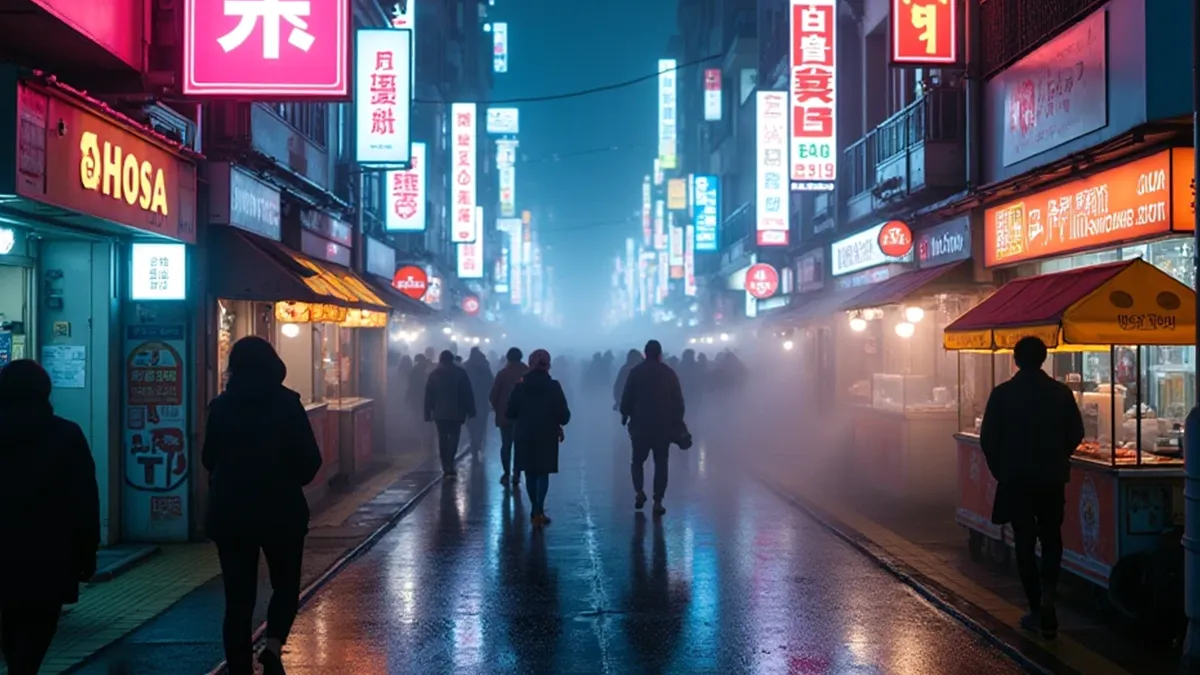

For foreign visitors and culture enthusiasts interested in Japan's unique nightlife, Tokyo's Yoshiwara holds a special place. A district where history and the present intersect, it is the largest centre of Japan's luxury soaplands (see our guide to Yoshiwara's luxury soaplands), and for a long time it has stood on a delicate balance between a legal gray zone and social tolerance.
Recently, however, an incident shook the industry. A popular, long-established shop that had operated in Yoshiwara for 43 years and was highly regarded for its quality of service and manners was suddenly raided, and on June 24, 2026, five people including the operator were arrested by the Tokyo Metropolitan Police Department on suspicion of violating the Prostitution Prevention Act by providing premises for prostitution (Yomiuri Shimbun Online, June 25, 2026, in Japanese).
Why could a shop so popular and loved for so many years collapse so easily? Behind it lie the fundamental "fragility" of the soapland business model and an environment in which "revenge resignation" (whistleblowing by insiders) is more likely than ever.
The Trigger: A Former Employee's Grudge and the Collapse of the Soapland's "Legal Fiction"
According to reports, the raid was triggered by whistleblowing (a criminal complaint) by a single former cast member. By her own account, when she tried to take time off she was harshly scolded by her superior and told she was fired, and she went to the police because "I wanted revenge" (NEWS Post Seven, in Japanese).
To understand this case, you need to know the "legal fiction" on which soaplands rely.
[The Legal Fiction (Loophole)]
Japan's Prostitution Prevention Act prohibits prostitution in exchange for money. That prohibition itself carries no penalty, but acts such as providing premises for prostitution are punishable (this "provision of premises" was exactly the charge in this case). The shops therefore maintain the position that "we merely operate a bathhouse. If a customer and a cast member happen to develop romantic feelings in the bath and end up in a sexual relationship, that has nothing to do with us."
[The Gap Between Reality and the Fiction]
Everyone knows, however, that the actual business is something else. The problem is that in trying to maintain this fiction, the shop creates contradictions with what actually happens on the floor.
Staff and cast members have easy access to evidence that proves the contradiction between management's position and the actual work. For example, if a new cast member is being trained in the manners and procedures for "full service" and that conversation or instruction is recorded, it becomes hard evidence that "the shop provided a place for sex and directed it."
Given the special nature of selling "sex," personal conflicts and resentments are unavoidable. If management mishandles its staff, it invites the greatest threat of all: "revenge whistleblowing" by an employee who knows everything about the inner workings. This case proved that even a shop with decades of history can collapse in an instant from a complaint from within.
Why Japan's Soaplands Are Disappearing: 4 Reasons Opening a New One Is Practically Impossible
The news that a long-established Yoshiwara shop suddenly vanished highlights a bigger structural crisis facing the whole soapland industry: the reality that "Japan's soaplands are decreasing year by year, and opening a new one is practically impossible."
When an existing operator tries to relocate or someone tries to start a new shop, they run into the high wall of Japan's strict laws and administrative rules.
- 1. Strict location rules (zones where the business is prohibited by ordinance)
- Store-based sex businesses such as soaplands can only operate in areas strictly limited by prefectural ordinance. Under Tokyo's ordinance, the whole of Tokyo is a prohibited zone except for part of Senzoku 4-chome in Taito Ward (Yoshiwara) (Tokyo's enforcement ordinance for the Amusement Business Act, in Japanese).
- 2. Distance restrictions from protected facilities
- Operating within 200 metres of schools, libraries, hospitals, child welfare facilities and similar facilities is prohibited. Finding land or a property that meets all of these conditions in a modern city is extremely difficult.
- 3. The trap of "grandfathered rights" and the ban on rebuilding
- Many of the shops operating today exist on "grandfathered rights" because they were already open before the rules were tightened. But if, for example, a new nursery or hospital opens near the shop, the building is treated as "existing non-conforming" (no longer meeting the legal standards). Once the building is torn down and rebuilt, it can never again be rebuilt or reopened as a soapland on that site.
- 4. There is practically nowhere to file a notification
- To open a soapland you need a licence under the Public Bath House Act plus a notification filed with the Public Safety Commission under the Amusement Business Act. It is a notification system, but because there is practically no property that satisfies both the prohibited zones and the distance restrictions above, opening a new shop from scratch by filing a new notification is not realistic.
For these reasons, anyone who wants to run a new soapland today has only one option: not opening a new shop, but acquiring a company that already holds operating rights through M&A.
In Closing: The Risk of Whistleblowing and Tokyo's Fading Adult Culture
The sudden end of the long-established Yoshiwara shop is by no means an isolated case. In an era when digital tools have lowered the barrier to whistleblowing and personal conflicts can lead straight to criminal cases and raids, the traditional soapland ecosystem is being driven into a corner.
Even a veteran shop that survived for more than 43 years can disappear overnight because of one employee's complaint. That reality says a lot about the dark future of Japan's soapland industry.
Perhaps, in a few more years, "soapland" culture itself will quietly disappear from Japan. When you visit Yoshiwara, it is important to understand this industry background and the law, and to avoid trouble. For the rules to follow to enjoy yourself safely, also read our guide to safety and soapland rules in Yoshiwara.
Frequently Asked Questions (FAQ)
- Q1. Aren't soaplands illegal under Japanese law?
- A. Soapland shops themselves operate under a licence based on the Public Bath House Act and a notification based on the Amusement Business Act, so the shops themselves exist legally. However, sexual intercourse in exchange for money (full service) inside the shop is prohibited by the Prostitution Prevention Act. It has long been tolerated as a gray zone under the fiction that "a customer and an employee developed a free romantic relationship in a private bath."
- Q2. If a shop is raided, is there a risk that its "customers" are arrested too?
- A. Japan's Prostitution Prevention Act places no penalty on prostitution itself. The penalties apply to acts by "the side that makes others engage in prostitution" (the shop), such as providing premises or brokering, and to soliciting in public view. There is currently no provision that directly punishes "the buyer" (the customer). However, if you happen to be present during a raid, there are social risks such as being questioned by police (ID checks) or having your hotel or employer contacted.
- Q3. Old soaplands keep decreasing; is it absolutely impossible to open a new one?
- A. Legally it is possible if the conditions are met, but in reality it is extremely difficult (practically impossible). In Tokyo, the area where the business may operate is limited to a corner of Yoshiwara, and finding a vacant property within it that is more than 200 metres from protected facilities such as schools and hospitals is hopeless in today's urban development. That is why entry into the business only happens through M&A of existing shops.
We also introduce adult content. If you are interested, please check out the link below.
>> Find an escort service