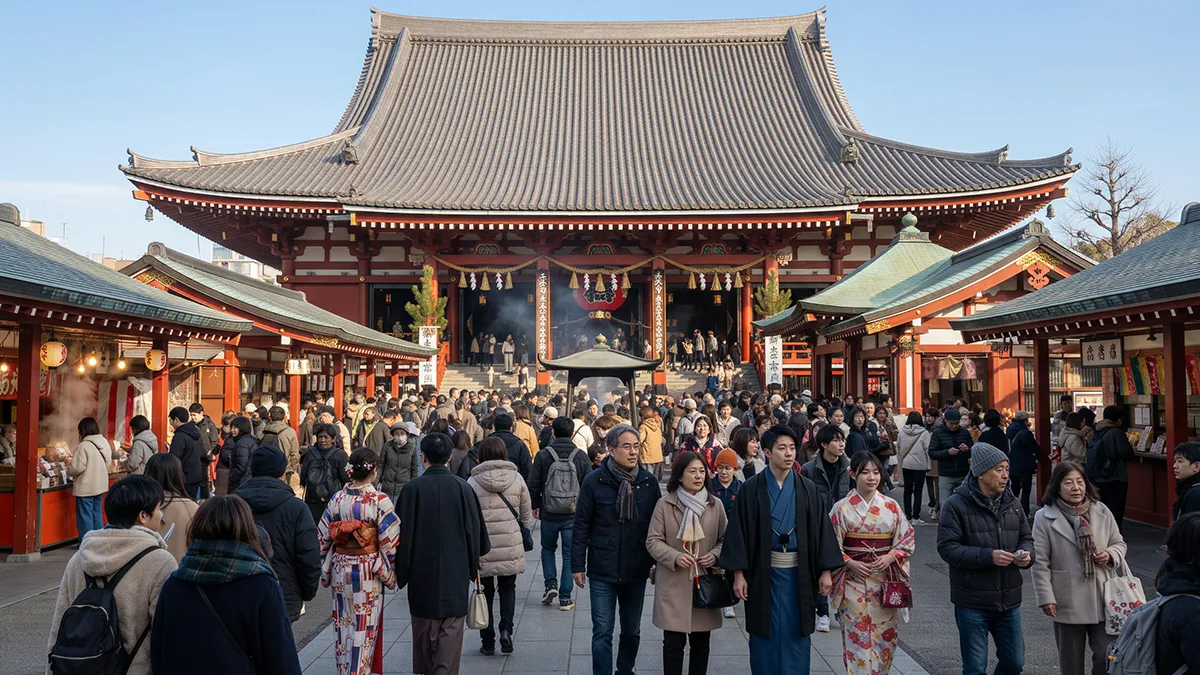

One tradition no Japanese New Year is complete without is hatsumode.
It means visiting a shrine or temple for the first time in the new year to pray for health and happiness in the year ahead, and every year a huge number of Japanese people take part.
For foreign travelers visiting Tokyo over the New Year holidays, hatsumode is a perfect chance to experience Japanese culture first-hand.
Rows of food stalls, the excitement of people celebrating the new year, the crisp, solemn air of the shrines. You will see a side of Japan that only appears at New Year.
On the other hand, Tokyo's famous shrines and temples draw millions of worshippers during the first three days of January (January 1 to 3, known as sanganichi), and they become extremely crowded.
To avoid ending up "exhausted after queuing for hours" or "confused because I didn't know the etiquette," it pays to prepare in advance.
In this article, we explain the following so you can enjoy hatsumode in Tokyo over New Year 2027.
- Shrines and temples we recommend for foreign travelers
- Times of day that let you avoid the crowds
- How worship etiquette differs between shrines and temples
- How to enjoy omikuji fortunes and omamori charms
1. What Is Hatsumode? What New Year Means to Japanese People
Hatsumode is the first visit of the new year to a shrine or temple.
People give thanks for having come safely through the past year and pray for health, family safety, business prosperity, success in their studies and more in the year ahead.
In Japan, the largest number of people make their visit during sanganichi, from New Year's Day to January 3, and it is customary to go by around January 7 at the latest, the end of the period called matsu-no-uchi.
Some people leave home on the night of New Year's Eve and pray at the very moment the year changes, a practice called ninen-mairi.
Hatsumode is a religious event, but for many Japanese people it is also a fun New Year outing with family and friends.
Foreign travelers are welcome to join in casually.
2. The 2027 New Year Calendar and Crowd Trends
| Date | Day | Crowd trend |
|---|---|---|
| December 31 | Thu | New Year's Eve. Worshippers pour in around midnight as the year changes |
| January 1 | Fri | New Year's Day. The busiest day of the year; daytime waits can run to several hours |
| January 2 | Sat | Second only to New Year's Day. Falls on a weekend, so crowds are large |
| January 3 | Sun | Last day of sanganichi. Still crowded because it is the weekend |
| January 4 | Mon | First working day for many companies. Some shrines see more visits from office workers |
| January 5-7 | Tue-Thu | Calmer than sanganichi. For those who want to visit within matsu-no-uchi |
In 2027, January 2 and 3 fall on a Saturday and Sunday, so crowds are expected to continue everywhere throughout sanganichi.
If you want a more relaxed visit, shifting your trip to January 4 or later is one option.
3. Recommended Hatsumode Spots in Tokyo for Foreign Visitors
Meiji Jingu (Harajuku): The Shrine with the Most Worshippers in Japan
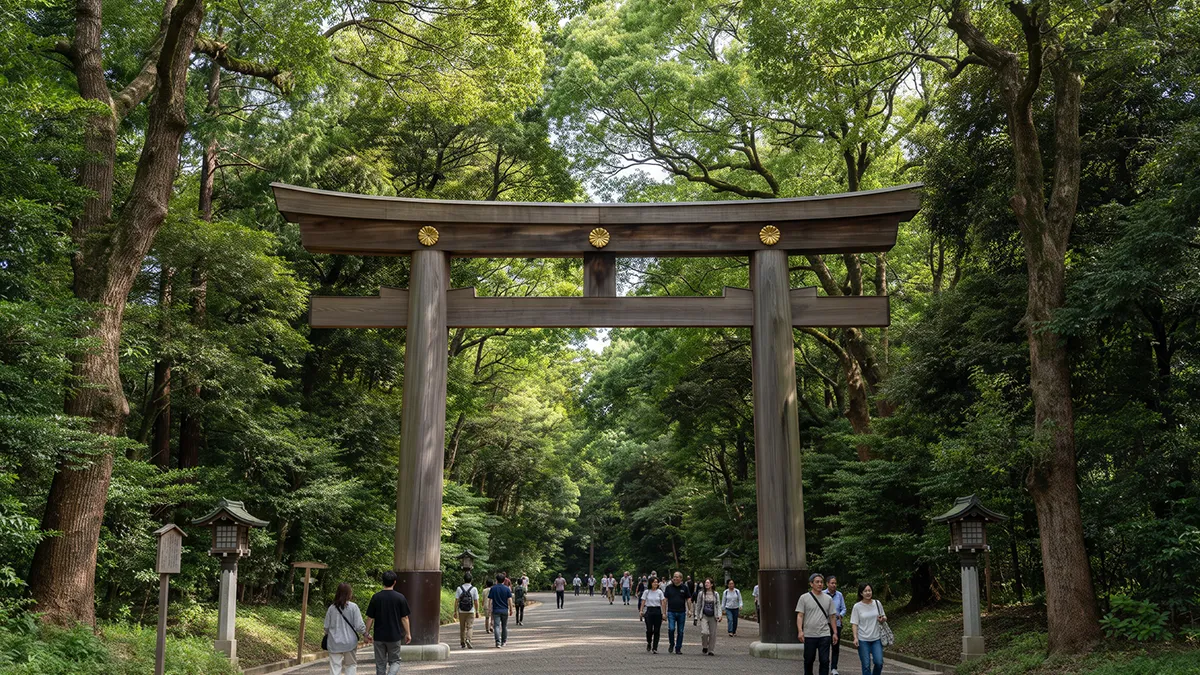
Meiji Jingu, right next to Harajuku Station, is the shrine that welcomes the most hatsumode visitors in Japan every year.
It is said that more than 3 million people visit during sanganichi.
Simply walking the approach, surrounded by a deep forest you would never expect in the middle of the city, is a special experience.
| Item | Details |
|---|---|
| Nearest stations | JR Harajuku Station, Tokyo Metro Meiji-jingumae Station (south approach). JR Yoyogi Station, Fukutoshin Line Kita-sando Station (north approach) |
| New Year opening hours | Usually open all night from New Year's Eve into New Year's Day (this varies by year, so check the official website) |
| Busiest times | From around 11 p.m. on New Year's Eve to 3 a.m. on New Year's Day, and daytime on New Year's Day (around 9 a.m. to 4 p.m.) |
| Relatively quiet times | Right after the gates open on January 2 and 3, and from evening onward during sanganichi |
During the day on New Year's Day, you may have to wait 1 to 3 hours before you can pray.
Over the New Year period, traffic restrictions are put in place around Harajuku and Yoyogi stations, and dedicated routes are set up for worshippers.
Follow the staff's directions as you go.
Senso-ji (Asakusa): Tokyo's Oldest Temple, Famous for Kaminarimon
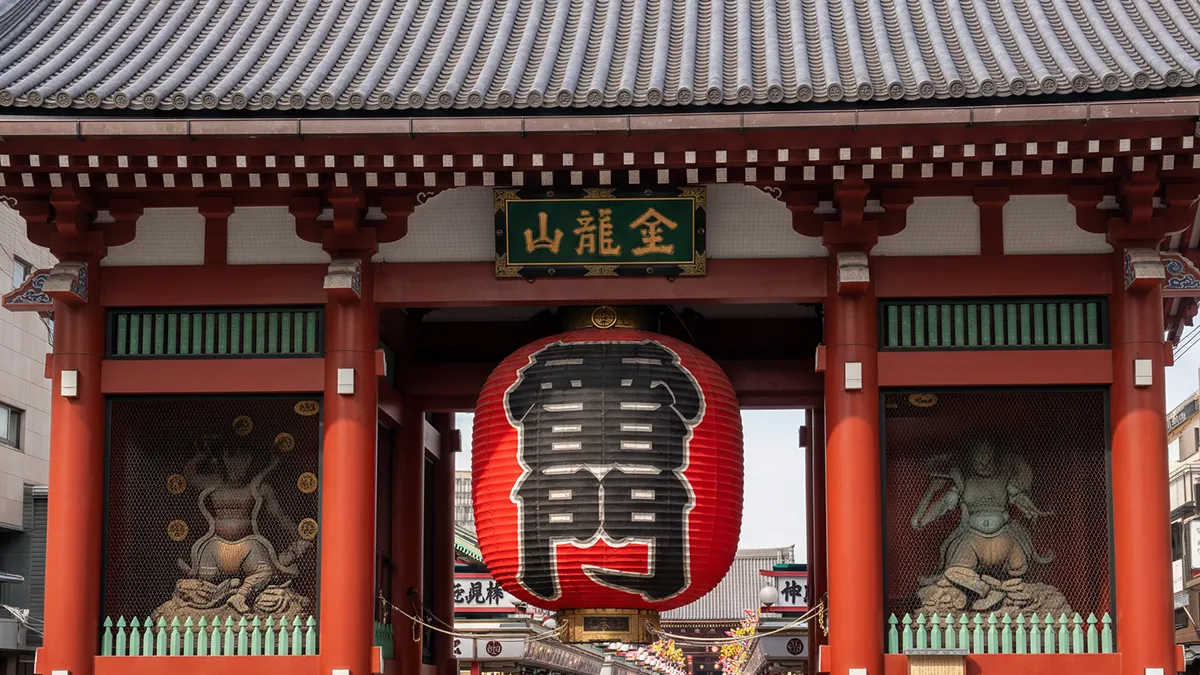
Senso-ji is known as the oldest temple in Tokyo, and its Kaminarimon ("Thunder Gate"), with its huge red lantern, is a symbol of Tokyo sightseeing.
At New Year, close to 3 million worshippers are said to visit during sanganichi alone.
Nakamise-dori, the shopping street that runs from Kaminarimon to the main hall, is lined with shops, letting you soak up the New Year atmosphere to the full.
| Item | Details |
|---|---|
| Nearest station | Asakusa Station (Tokyo Metro Ginza Line, Toei Asakusa Line, Tobu Skytree Line, Tsukuba Express) |
| Busiest times | From around midnight to 3 a.m. on New Year's Day, and during the day (around 10 a.m. to 4 p.m.) |
| Relatively quiet times | Early morning on New Year's Day (around 4 a.m. to 7 a.m.), and from evening onward during sanganichi |
During the day on New Year's Day, it can take 2 to 3 hours to get from Kaminarimon to the main hall.
Senso-ji is a Buddhist temple, so the way you pray differs a little from a Shinto shrine (we explain this in detail in "5. Worship Etiquette Foreign Visitors Should Know").
Kanda Myojin (Ochanomizu / Akihabara): The Guardian Shrine of Akihabara
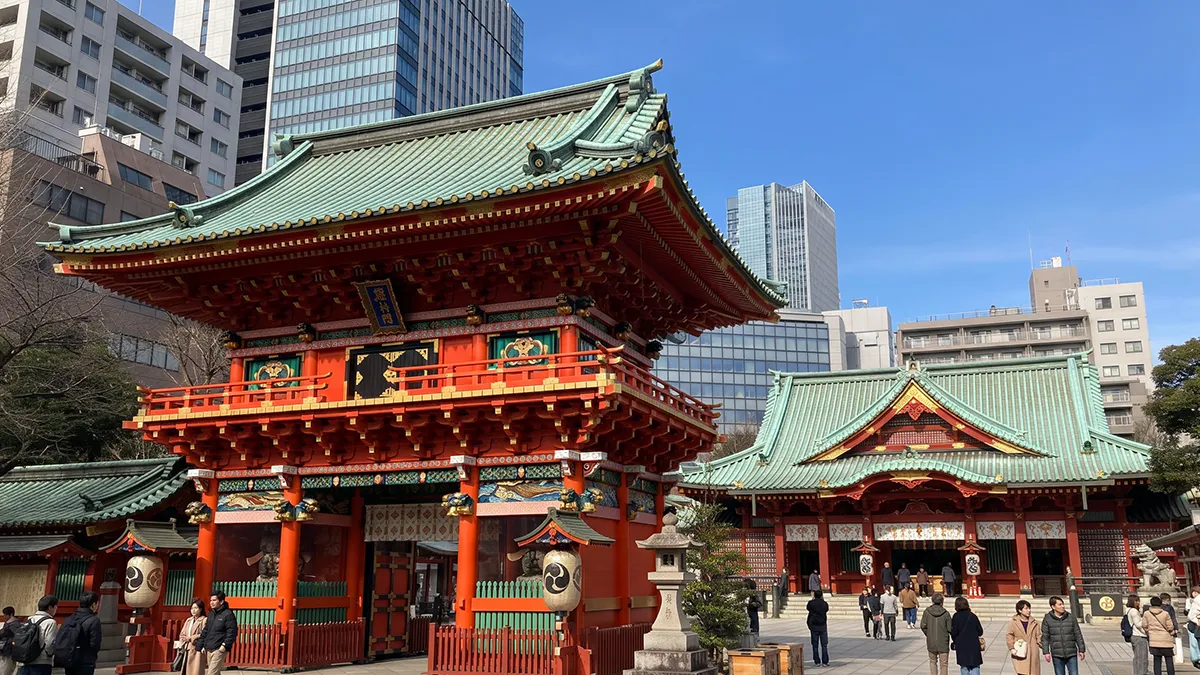
Kanda Myojin, the shrine that watches over Akihabara, Otemachi and the surrounding area, has a history of nearly 1,300 years.
It is known as the shrine of business prosperity, and many businesspeople come to pray here.
Being close to Akihabara, it is also known for charms that pray for protection in IT-related matters and for its collaborations with anime, making it popular with foreign anime fans too.
| Item | Details |
|---|---|
| Nearest stations | JR / Tokyo Metro Ochanomizu Station (5-minute walk), JR Akihabara Station (7-minute walk), Tokyo Metro Suehirocho Station (5-minute walk) |
| Busiest times | From around 11 p.m. on New Year's Eve to 3 a.m. on New Year's Day, and daytime during sanganichi |
| Relatively quiet times | Early morning during sanganichi (around 6 a.m. to 8 a.m.), and after 6 p.m. |
| Note | Around the first working days of the year, group visits by company employees make it crowded even on weekdays |
Another attraction is how easy it is to combine with sightseeing in Akihabara.
However, for a while after the first working day of the year (expected to be January 4 in 2027), the shrine gets crowded with people visiting as company groups.
Zojo-ji (Shiba Park): Ringing in the New Year with Tokyo Tower
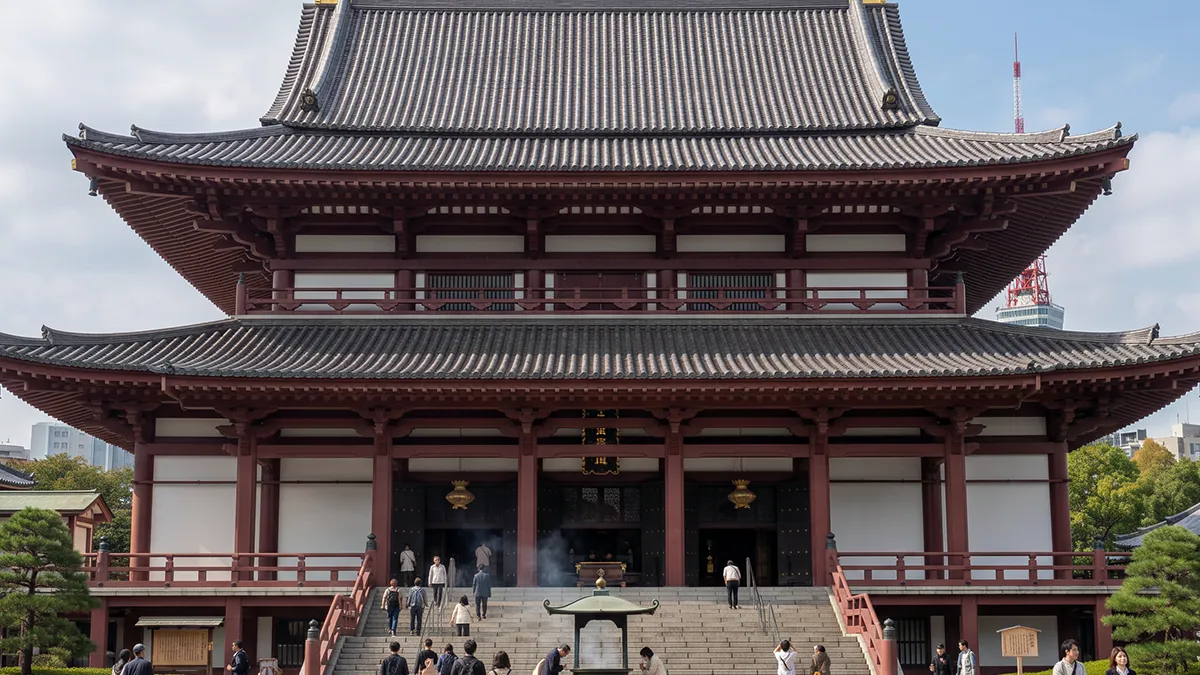
Zojo-ji is a large Buddhist temple right next to Tokyo Tower.
The view of Tokyo Tower rising behind the temple, capturing tradition and modernity in a single frame, is especially popular with foreign travelers.
On the night of New Year's Eve, it is packed with people waiting to welcome the moment the year changes.
| Item | Details |
|---|---|
| Nearest stations | Toei Daimon Station, Onarimon Station, Shibakoen Station, JR Hamamatsucho Station |
| Busiest times | From around 10:30 p.m. on New Year's Eve to 2:30 a.m. on New Year's Day (the countdown and the ringing of the New Year's Eve bell) |
| Relatively quiet times | Early morning during sanganichi (around 6 a.m. to 9 a.m.) |
Ringing the temple bell on New Year's Eve (joya no kane) may require advance registration separate from an ordinary visit.
If you want to take part, check the official website for the latest information.
4. 7 Tips for Avoiding the Crowds
Tip 1: Go early in the morning or in the evening
At every shrine and temple, early mornings and evenings during sanganichi are relatively quiet.
Early morning on January 2 and 3 in particular is the best time for an unhurried visit.
Tip 2: Shift your visit to January 4 or later
If your schedule allows, avoiding sanganichi altogether is the best way to beat the crowds.
As long as you go within matsu-no-uchi, which lasts until around January 7, you can fully enjoy it as hatsumode.
Tip 3: Check the official websites and social media for the latest information
Opening hours and traffic restrictions can change from year to year.
Before you head out, check the official website of each shrine or temple for the latest information.
Tip 4: Go by train
During sanganichi, traffic restrictions are in place on the surrounding roads, and in most cases parking is not available.
Always use trains or other public transport.
Some lines run all night on New Year's Eve, so check the announcements from each railway company.
Tip 5: Dress warmly
Tokyo is cold in January, especially at night and early in the morning.
You may be queuing for a long time, so keep warm with a thick coat, gloves, a scarf and disposable heat packs.
Tip 6: Use the restroom before you go
In crowded shrine grounds, long lines form for the restrooms too.
It is reassuring to go at the station or elsewhere before you join the queue.
Tip 7: Have coins ready
Coins come in handy for offerings and for buying things at the food stalls.
Keep them in your pocket so you don't have to take your wallet in and out in the crowds.
For tips on getting cash, see 【2026 Ultimate Guide】My Foreign Card Doesn't Work at a Japanese ATM!? A Complete Guide to Cash Withdrawals & Emergency Troubleshooting.
You also need to watch out for pickpockets in the crowds. We cover safety precautions for your trip in Is Tokyo Nightlife Really Safe? 5 Fatal Risks for Tourists & The Ultimate Survival Manual.
5. Worship Etiquette Foreign Visitors Should Know
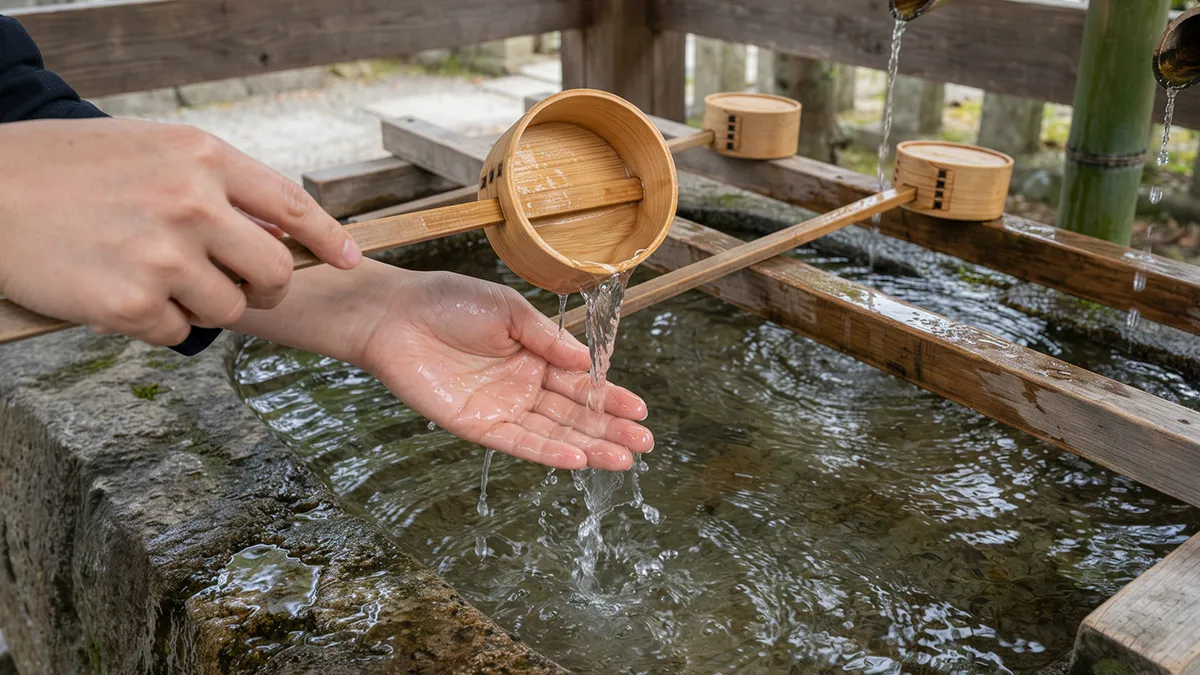
The way you pray differs a little between Japanese Shinto shrines and Buddhist temples.
It doesn't have to be perfect, but knowing the basics will make your visit more pleasant.
How to pray at a shrine (Meiji Jingu, Kanda Myojin, etc.)
- Bow lightly before passing through the torii gate (walk along the edge of the approach, as the center is said to be the path of the gods)
- Purify your hands and mouth at the purification fountain (temizuya)
- Step forward to the worship hall and put your offering in the box
- If there is a bell, ring it
- Pray using "two bows, two claps, one bow" (bow deeply twice, clap your hands twice, put your hands together and pray, then bow once more at the end)
How to pray at a temple (Senso-ji, Zojo-ji, etc.)
- Bow lightly before passing through the main gate
- Purify your hands and mouth at the purification fountain
- At temples such as Senso-ji, waft the smoke from the large incense burner (jokoro) over your body to purify yourself
- Put your offering in the box and pray quietly with your hands together (do not clap at a temple)
- Bow once at the end
How to purify yourself at the temizuya
- Hold the ladle in your right hand, scoop up some water and rinse your left hand
- Switch the ladle to your left hand and rinse your right hand
- Switch it back to your right hand, pour some water into your cupped left palm and rinse your mouth with it (never put your mouth directly to the ladle)
- Rinse your left hand once more
- Tilt the ladle upright so the remaining water runs down the handle, then put it back where it was
Other etiquette
- Do not take photos where photography is prohibited, such as inside the worship hall or main hall
- Do not cut in line for prayers
- Do not make loud noise
- Remember that you are in a sacred place, and refrain from drinking and smoking in the grounds
6. Enjoy Omikuji, Omamori and Food Stalls
Tell your fortune for the year with omikuji
Omikuji are paper fortunes that tell you your luck for the year.
They show a result such as "great blessing," "blessing" or "curse," along with advice on health, love, work and more.
Some shrines and temples offer omikuji in English, which are popular with foreign travelers.
If you draw a bad result, tying it at the designated spot in the grounds before you leave is said to "leave the bad luck behind."
A good result can be taken home and kept as a charm.
Omamori make perfect souvenirs
Omamori are good-luck charms that carry all kinds of wishes, such as health, traffic safety, academic success and love.
They are small, easy to carry and often have distinctively Japanese designs, so they are also welcome as souvenirs.
Some shrines have limited-edition charms you can only get there.
New Year street food
During the hatsumode season, many food stalls line the grounds and approaches.
You can enjoy festival treats such as takoyaki, yakisoba, candied apples and amazake, a sweet drink made from rice.
A warm cup of amazake in the cold is something special.
7. Ways to Combine Hatsumode with Year-End and New Year Fun in Tokyo
Hatsumode becomes even more enjoyable when combined with sightseeing in Tokyo over the year-end and New Year holidays.
- Combine hatsumode at Senso-ji with a stroll around Tokyo Skytree and the Sumida River
- After visiting Meiji Jingu, enjoy the New Year sales in Harajuku and Omotesando (for tips on smart shopping, see Your Ultimate Guide to Tax-Free Shopping in Japan)
- After visiting Kanda Myojin, explore anime and game shops in Akihabara (we also recommend [2026 Ultimate Guide] Akihabara Maid Cafes: How to Enjoy & Top Picks)
- After seeing in the New Year at Zojo-ji, gaze at the illuminated Tokyo Tower (for winter night views, see also [2025-2026 Edition] Must-See Tokyo Attractions! 3 Recommended Winter Illumination Spots)
For how to spend New Year's Eve and for nightlife over the holidays, see also Tokyo Escorts & Nightlife Over the New Year Holidays [2026-2027]: Are Shops Open? Prices, Crowds and Booking Tips.
Summary: To Experience a Japanese New Year, Go for Hatsumode
For Japanese people, hatsumode is an important event that marks the start of the year.
For foreign travelers, too, it is a precious chance to experience traditional Japanese culture and the special atmosphere of New Year all at once.
- Meiji Jingu, Senso-ji, Kanda Myojin and Zojo-ji are extremely crowded during sanganichi
- Visiting early in the morning, in the evening, or on January 4 or later lets you take your time
- At shrines, pray with "two bows, two claps, one bow"; at temples, pray quietly without clapping
- Enjoy the New Year spirit with omikuji, omamori and food stalls
- Don't forget to dress warmly and check the official websites for the latest information
Start 2027 with hatsumode in Tokyo and experience a New Year that only Japan can offer.
You can plan your whole trip to Tokyo with 【2026 Latest】Your Ultimate Tokyo Itinerary: Must-Visit Spots & 5-Night, 6-Day Plans for Foreigners.
Frequently Asked Questions (FAQ)
- Q1. Can foreigners take part in hatsumode?
- A1. Of course. Hatsumode is a New Year event that anyone can join, regardless of religion or nationality. As long as you follow the basic etiquette, you are welcome to enjoy it casually.
- Q2. By when should I go for hatsumode?
- A2. In general, the largest number of people visit during sanganichi (January 1 to 3), and the rule of thumb is to go by around January 7, within matsu-no-uchi at the latest. That said, visiting after that is no problem.
- Q3. How much should I put in as an offering?
- A3. There is no set amount. In Japan, many people offer a 5-yen coin, because "5 yen" (go-en) sounds like the word for a good connection or fate. Offering whatever you feel is right is enough.
- Q4. Should I go to a shrine or a temple?
- A4. Either is fine. Just note that the etiquette differs a little: at a shrine you pray with "two bows, two claps, one bow," while at a temple you pray quietly without clapping.
- Q5. Can I visit from the night of New Year's Eve?
- A5. Some shrines, such as Meiji Jingu and Kanda Myojin, let you pray all night from New Year's Eve into New Year's Day. However, the time around the turn of the year is the most crowded of the whole year, so leave plenty of time. Check the official website of each shrine or temple for the latest opening hours.
We also introduce adult content. If you are interested, please check out the link below.
>> Find an escort service